Fortress and court
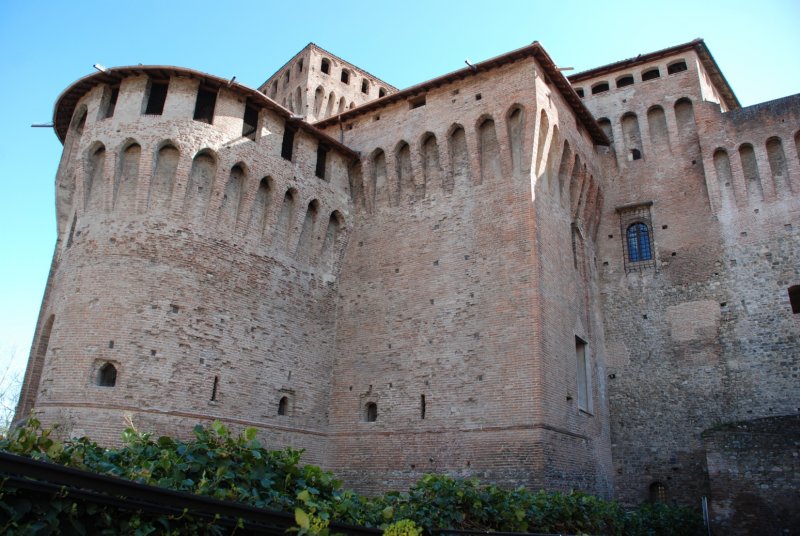
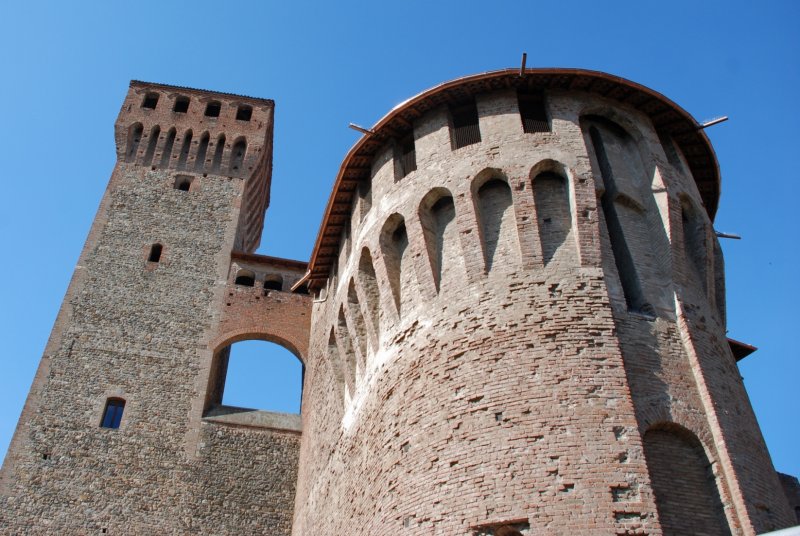
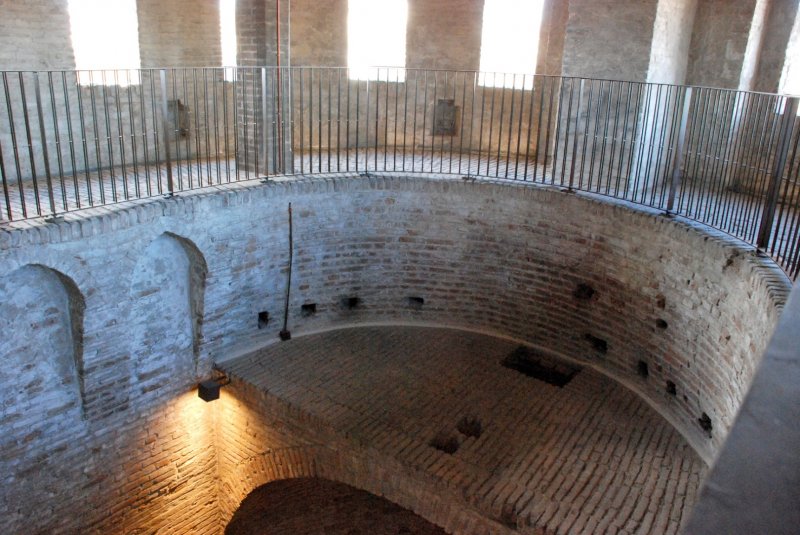
The tour begins at the Rocchetta, built by the Contrari family against an ancient outer wall of the fortress. Used as a fort, in the past it had two drawbridges, one of which led to the hanging gardens carved out of the medieval ravelin. The rooms were originally not covered and were not lit by windows, which were not made until the 17th century. Slits used for bows, crossbows or artillery pieces are visible on the walls. Among the relics preserved in the Rocchetta today are a muzzle-loading cannon from 1819 and two pairs of bells. The recent restoration of the Rocchetta has made possible new visitor routes inside.
Outside the Fortress, it is worth pausing to consider the Courtyard. Looking at the walls, one immediately notices the different building materials used over the centuries: the river stone of the oldest structures and the terracotta bricks of the later renovations, especially from the Contrari period.
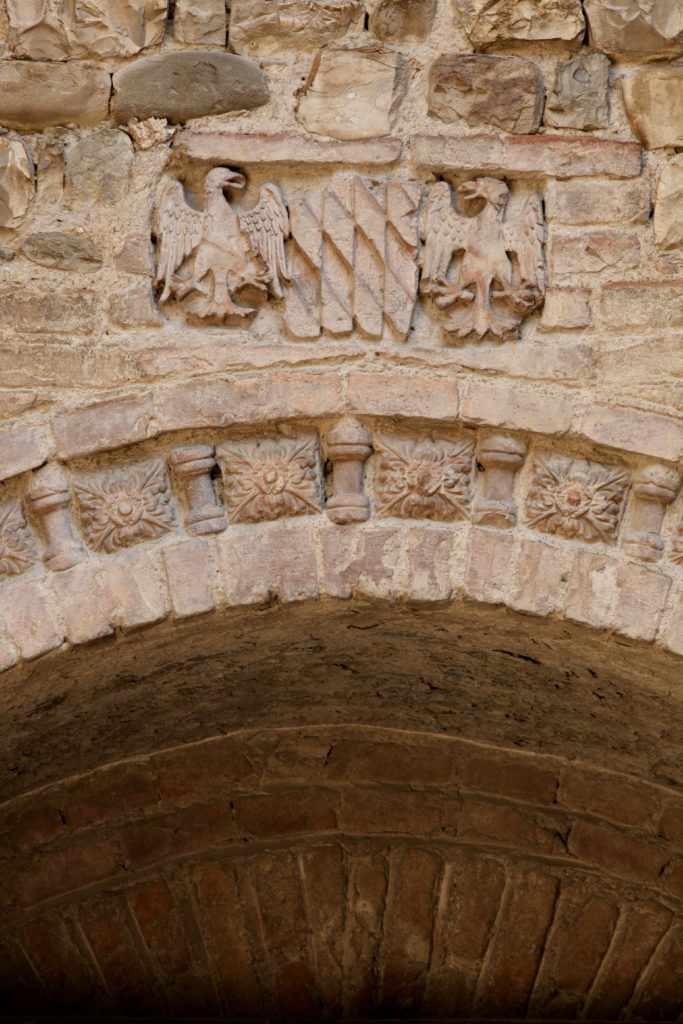
Note the two archivolts that adorn the entrance to the Rocchetta and the Fortress premises: the first with roses and “rocchi” surmounted by the Contrari coat of arms, the second with fleurs-de-lis and Estense eagles.