Hall of Lions and Leopards
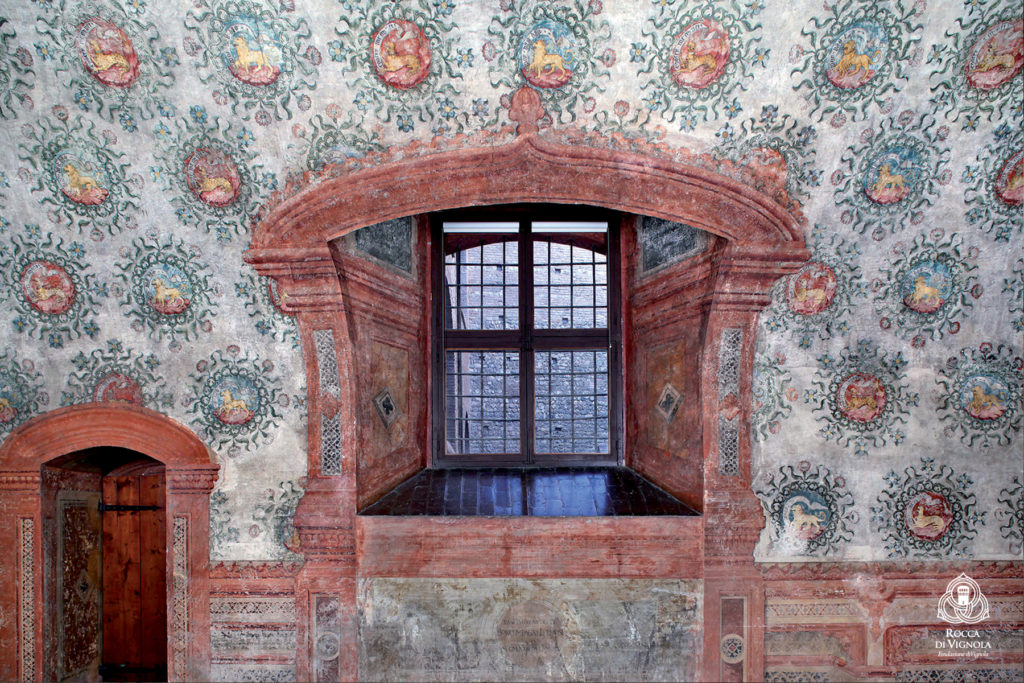
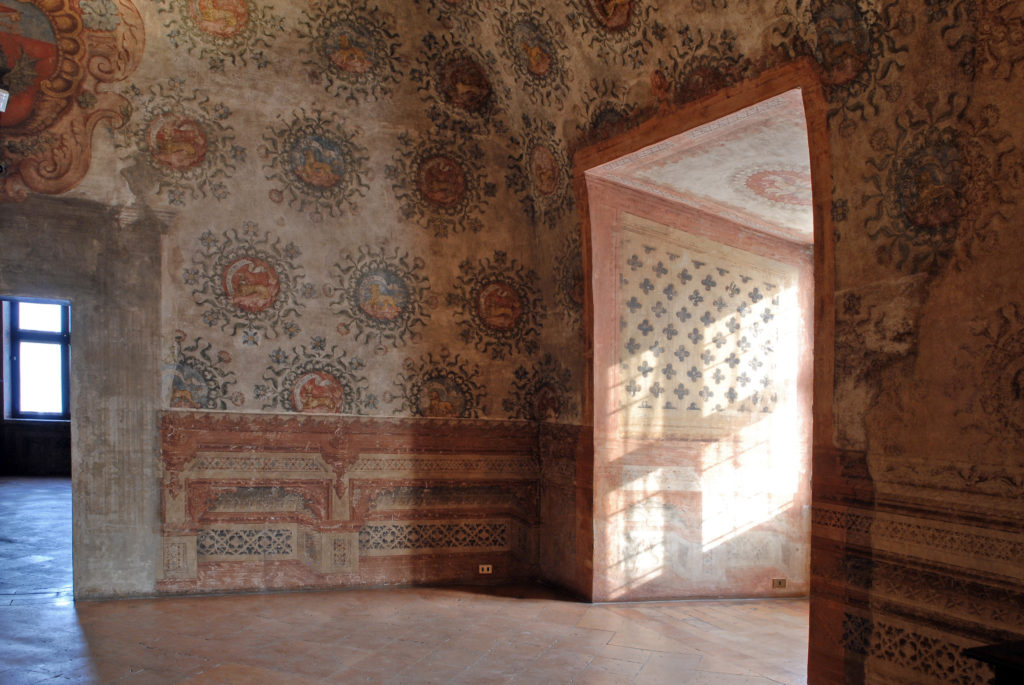
With the Hall known as the Hall of Lions and Leopards (or cheetahs), the tour of the Fortress’s large frescoed rooms, created in the 15th century and restored at the beginning of the last century, begins.
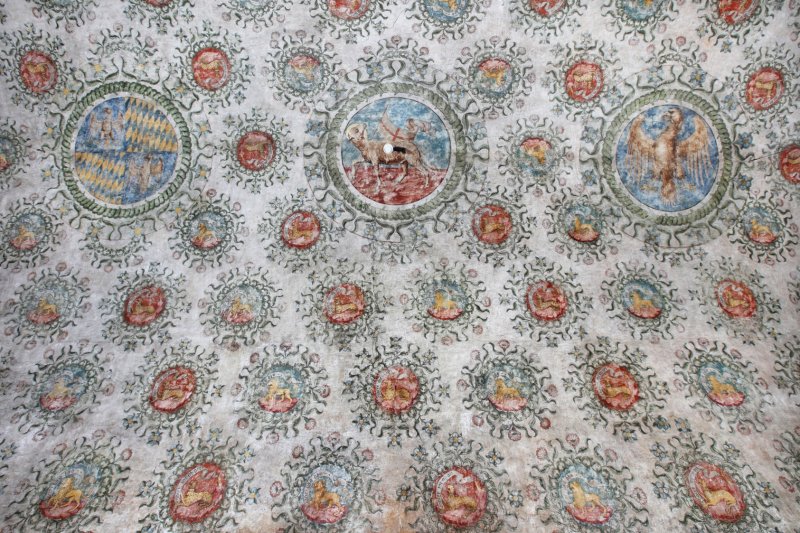
Within these walls the public life of the feudal court took place. The hall owes its name to paintings alternating between lions and cheetahs, the latter employed in medieval hunting parties. The two animals depict the bodies of heraldic feats, symbolic representations of virtue, alliances and political intent, and are surrounded by so-called gramineous or oxydian crowns, emblems of military feats.
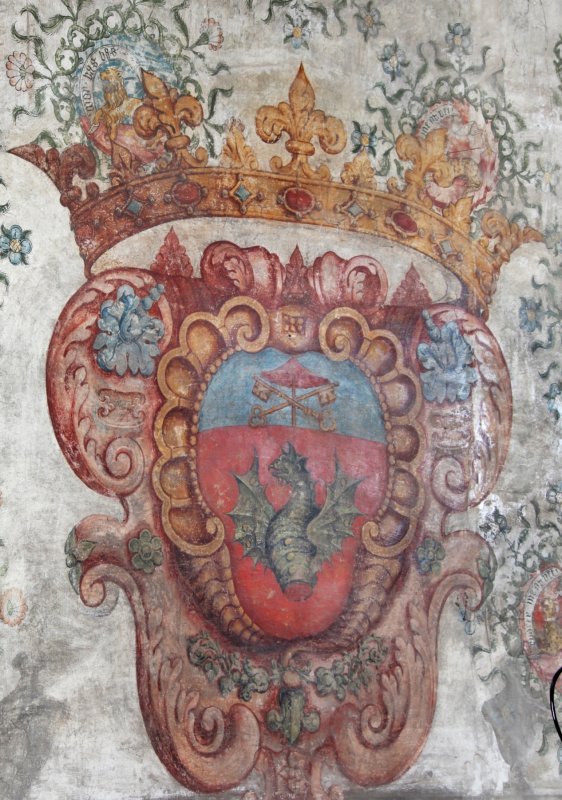
The predominant theme of the cycle is the close alliance between the Contrari and the Estensi. On the frescoed vault, in fact, can be seen the white eagle with semi-folded wings on a blue background, the Este coat of arms in its most traditional version, and the weapon of the Contrari, composed of an Este eagle inquartate and gold and azure fusati. Between the two emblems is glimpsed the Paschal Lamb, emblem of Christ’s Resurrection and symbol of purity. The arms of the Boncompagni family placed on the doors of the hall were painted after 1577.