
Chapel of Uguccione
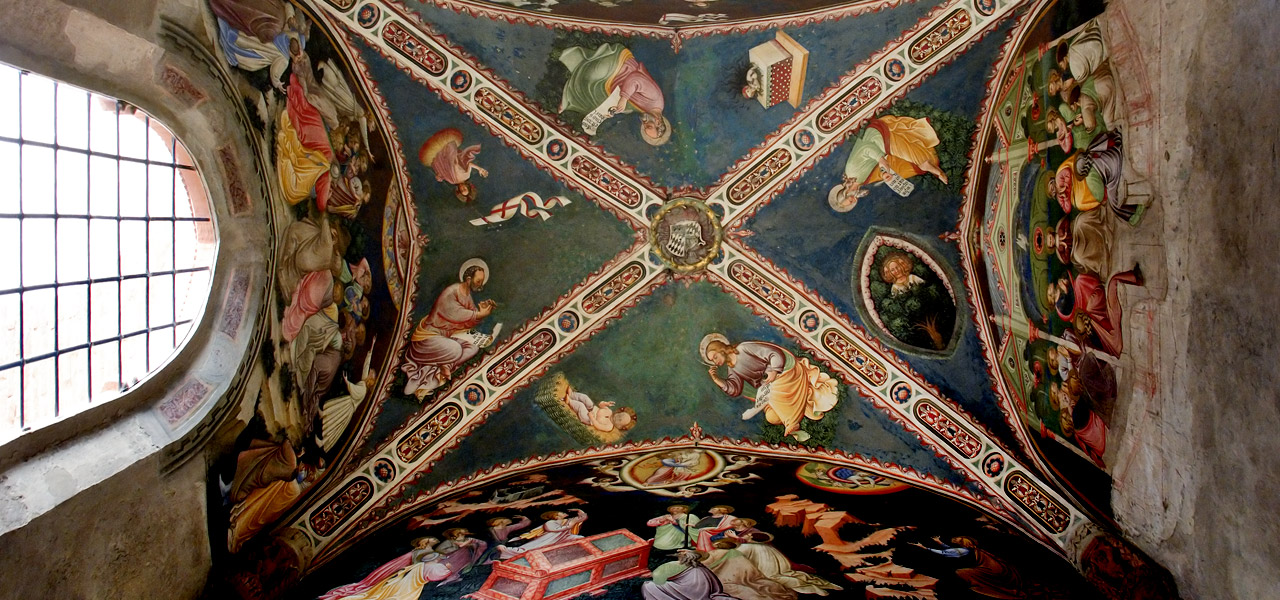
The Uguccione Chapel, an immersive journey in ultra-high definition
Immerse yourself in the magnificent gigapixel frescoes through a themed virtual tour that will take you on a discovery of the details almost invisible to the naked eye and the curiosities they conceal. A never-before-seen tour dedicated to the art-historical aspects of the masterpiece, made possible through cutting-edge multimedia storytelling technologies.

The gigapixel images of the Chapel were made possible by funding for the digitization project completed in 2025,
funded by the European Union – Next Generation EU
Go to the page dedicated to the project Trasfor_MO – For a Digital Transformation of Modenese Cultural Heritage.
“For those who enter the Fortress of Vignola, the chapel with frescoes featuring Stories of Christ remains one of the most intense and vivid experiences among Emilian works of the period” (A.C. Quintavalle, I freschi di Vignola e la pittura emiliana del primo Quattrocento, in “Arte Antica e Moderna,” 1962)
On the second floor of the Rocca, the main floor where the family life of the lords and their guests took place, is the Contrari Chapel, mentioned as a small church in a 1642 inventory and remembered as a chapel two centuries later.
The Contrari Chapel represents an authentic jewel of late Gothic art in northern Italy. Commissioned by Uguccione Contrari, a nobleman from Ferrara, lord of the castle and the lands of the contado di Vignola from 1401, it was frescoed around 1425 according to the most recent analyses. The documentary evidence found so far, however, does not explicitly mention either the fresco painters or their work. The exemplary cycle of ” neo-Giottesque” frescoes in the Contrari Chapel represent a fundamental and original episode in the figurative culture of the Este sphere in the first half of the 15th century.
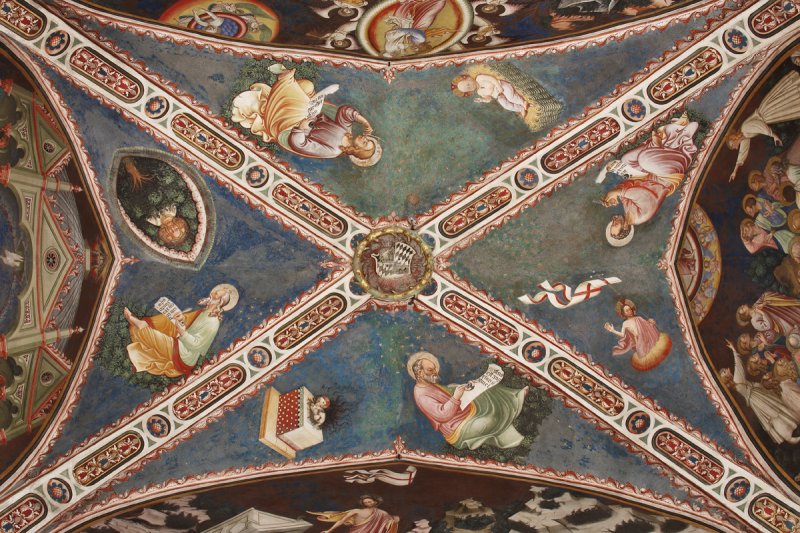
Despite the small size of the room (it was a chapel reserved for the devotion of the Contrari family), the visitor is seized with a feeling of admiring awe when observing the frescoes that decorate the lunettes of the walls and the ceiling sails.
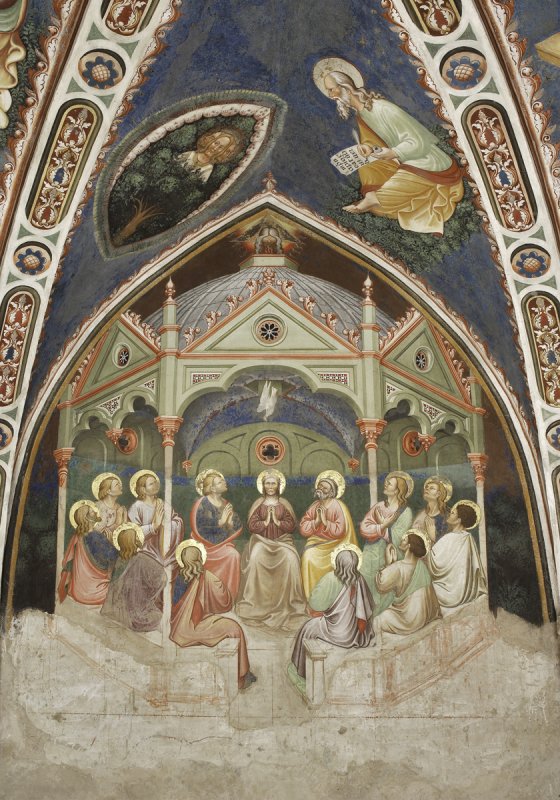
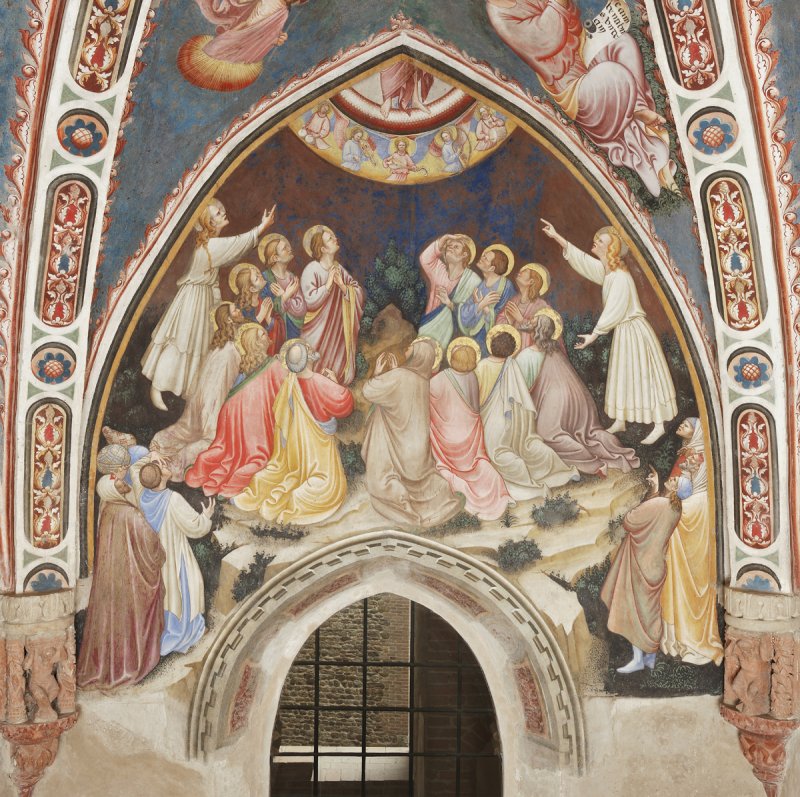
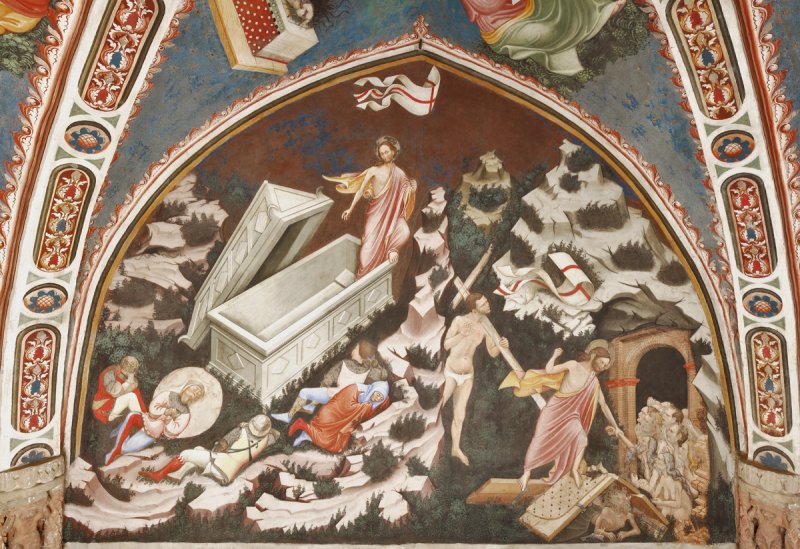
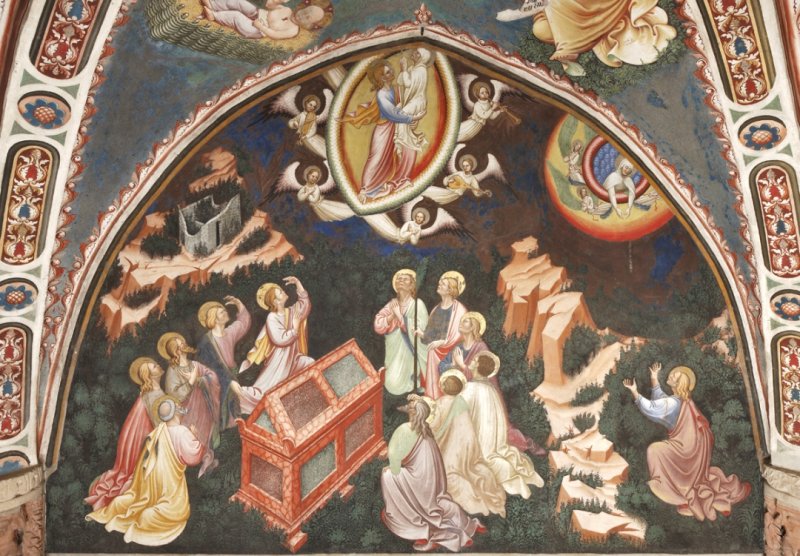
On the lunettes of the four walls are depicted: the Pentecost ( west, entrance door wall); the Resurrection of Christ and His Descent into Limbo (north wall); the Ascension (east); and the Assumption into heaven of the Virgin and the gift of the sash with which her body was girded to the apostle Thomas (south wall). These episodes, following Christ’s death, are to be related to the images in the starry sail above.

Uguccione's Chapel in Mixed RealityPaintings Without Boundaries
Step across the threshold of the Contrari Chapel and enter a world beyond its paintings. Figures emerge from the walls, colors expand into the surrounding space, and scenes come to life in an immersive experience that reveals stories, symbols, and meanings preserved for centuries, restoring the full narrative and spiritual power of one of the Rocca’s most precious treasures.